

By Dr. Rajeev Deol
India is world’s largest democracy and has a long tradition of peaceful protests. The right to expression is an important feature of a democratic society and peaceful protest is an important instrument through which citizens can communicate their grievances to those in power. When people feel that their demands are not adequately heard through ordinary political or administrative channels, demonstrations provide an alternative means of expressing public opinion. However, India has increasingly acquired the reputation of being a “nation of strikers”, because strikes, protests, bandhs, Rail Roko and demonstrations have become frequent methods of expressing grievances against government policies or laws. Different sections of society like government employees, political parties’ teachers, farmers, transport workers, students and industrial labourers, often resort to hartaal to press their demands.
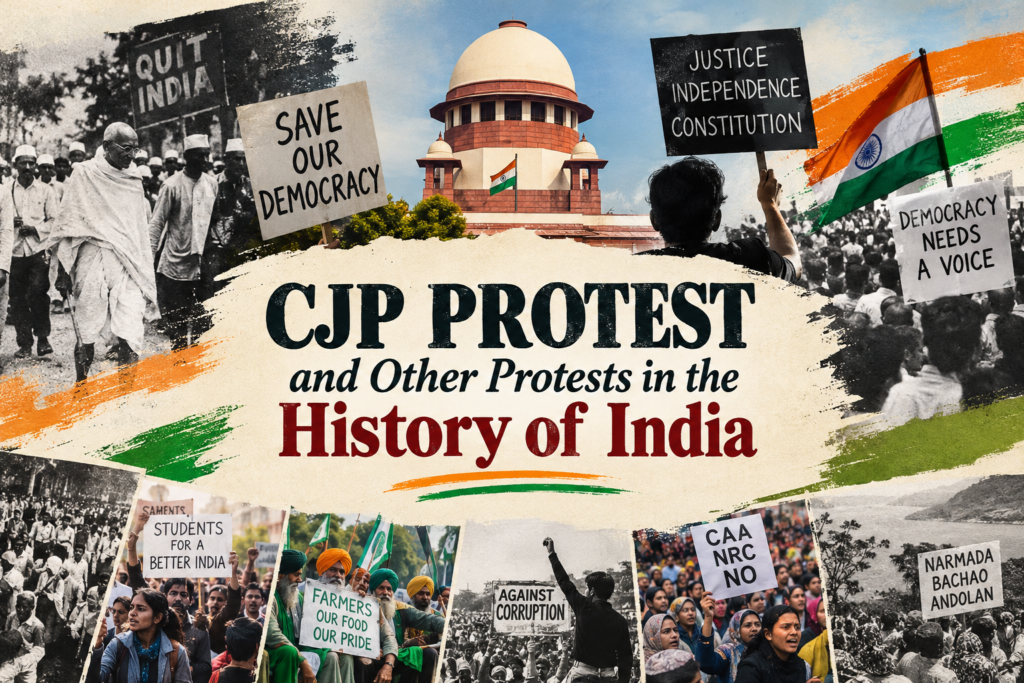
A strike or protest is essentially to draw attention of the local or central government to legitimate demands of citizens. Historically, protests played an important role to draw the attention of the government towards demands of the people. During the freedom struggle, Mahatma Gandhi successfully used non-violent methods such as strikes, boycotts and civil disobedience against colonial rule. After independence, workers continued to use strikes/protests to demand better wages, job security, reasonable working hours and improved working conditions. Thus, strikes have an important place in India’s democratic system.
After Independence, there are several reasons for frequent protests and bandhs. Major reasons include social and economic problems like unemployment, inflation, low wages, insecurity of employment among the youths and dissatisfaction with government policies. In 2020, India saw longest farmers protest against three agricultural laws passed by the Parliament. Farmers, particularly from Punjab, Haryana and western Uttar Pradesh, organised large protests around Delhi. Kisan unions demanded–(1) repeal of the three farm laws, (2) legal guarantee for minimum support price (MSP) (3) protection of farmers’ livelihoods and agricultural markets (4) withdrawal of cases registered against protesting farmers. Samyukta Kisan Morcha (SKM), which led the protest, claimed that more than 670 farmers died during the year-long movement. On the other hand, the Central Government told Parliament on 1 December 2021 that the Ministry of Agriculture had no record of farmers who died during the agitation. After prolonged protests, the Union Government announced the repeal of the three farm laws in November 2021. During 2024-25 Farmers’ organisations again mobilised and demanded a legal guarantee for MSP, implementation of the recommendations of the Swaminathan Commission, debt relief and other agricultural issues. Farmers attempted to march towards Delhi, leading to prolonged demonstrations at the Punjab-Haryana border. Such Andolan can be discussed as an example of collective democratic action. Farmers used marches, demonstrations, public meetings, negotiations and other peaceful forms of protest to bring agricultural issues to the attention of the government.
Nowadays Jantar Mantar in New Delhi (particularly after July 2026) has become one of the most important symbols of youth-led peaceful protest by the Cockroach Janta Party (CJP). After independence a new trend has emerged among youth and has taken them to the streets to protest for change and transparency in system that emerged in the political system of India. The Cockroach Janta Party (CJP) became an important symbol of the digital mobilisation of the Zen G by using Instagram, X and other social-media platforms to protest the alleged illegality of the Special Intensive Revision (SIR). Abhijeet Dipke (founder of CJP), Ashutosh Ranka and Saurav Das — Co-Conveners of CJP initially associated with NEET paper leakage, problems in the education system, concerns about students’ futures and demands for political accountability. The Cockroaches demanded the resignation of Education Minister Dharmendra Pradhan. The Jantar Mantar agitation ended on 25 July 2026, following the resignation of Dharmendra Pradhan. This protest at Jantar Mantar represented the constitutional right of citizens to express their dissent and demand accountability from the union government.
Congress party and Leader of the opposition Rahul Gandhi initially stayed somewhat separate from the protest. Rahul Gandhi started “Chhatron Ki Goonj” nationwide student-engagement campaign programme. It is a student-outreach campaign in Kota, Rajasthan where he raised the issues of students like- paper leaks, examination irregularities, high education fees, unemployment and lack of fair employment opportunities. Rahul Gandhi has subsequently interacted with students in Dehradun, Prayagraj, Pune and Indore. Rahul Gandhi wanted to give political voice to students’ grievances in Parliament and outside it alongwith government’s accountability over issues. For this, Rahul Gandhi staged a protest outside Prime Minister Narendra Modi’s residence on 26 July bringing the students’ demands into the national political arena which ultimately changed the whole scenario of Indian politics. Rahul Gandhi too demanded that Dharmendra Pradhan had to leave the government. In October 2026, Rahul Gandhi and 300 MPs (INDIA bloc) joined protests involving the CJP/youth movement over the Special Intensive Revision (SIR) of electoral rolls and “Vote chori” and demanded the resignation of Chief Election Commissioner Gyanesh Kumar turned central Delhi into a political battleground. On October 7, Rahul Gandhi and Priyanka Gandhi along with other party workers were detained while attempting to march towards Nirvachan Ayjog (Election Commission) office where they sought to meet the Election Commissioners. The Delhi police on Wednesday registered an FIR against Rahul Gandhi and Priyanka Gandhi and their supporters for forcibly entering Akashvani Bhawan during protest march against Chief Election Commissioner Gyanesh Kumar. All these happenings create a chaos in Indian democracy which is not a healthy sign for the development of society. Even we will also face certain issues at International level.
Protests can have positive as well as negative consequences. On the positive side, they provide a collective voice to the citizens and attract attention of the government to their genuine grievances. However, frequent politically motivated protests can seriously affect the social life and the economy of the country. When protests are accompanied by violence, destruction of public property or forced closure of shops and businesses, they undermine the very democratic values that protests are supposed to protect.
In conclusion, India’s tradition of protest is an important part of its democratic character, but a mature democracy must learn to combine the right to dissent with the responsibility to protect public interest. The objective should not be to eliminate strikes and protests but to create a society where justice can be achieved more effectively through dialogue, negotiation and democratic participation.
Leave a Reply